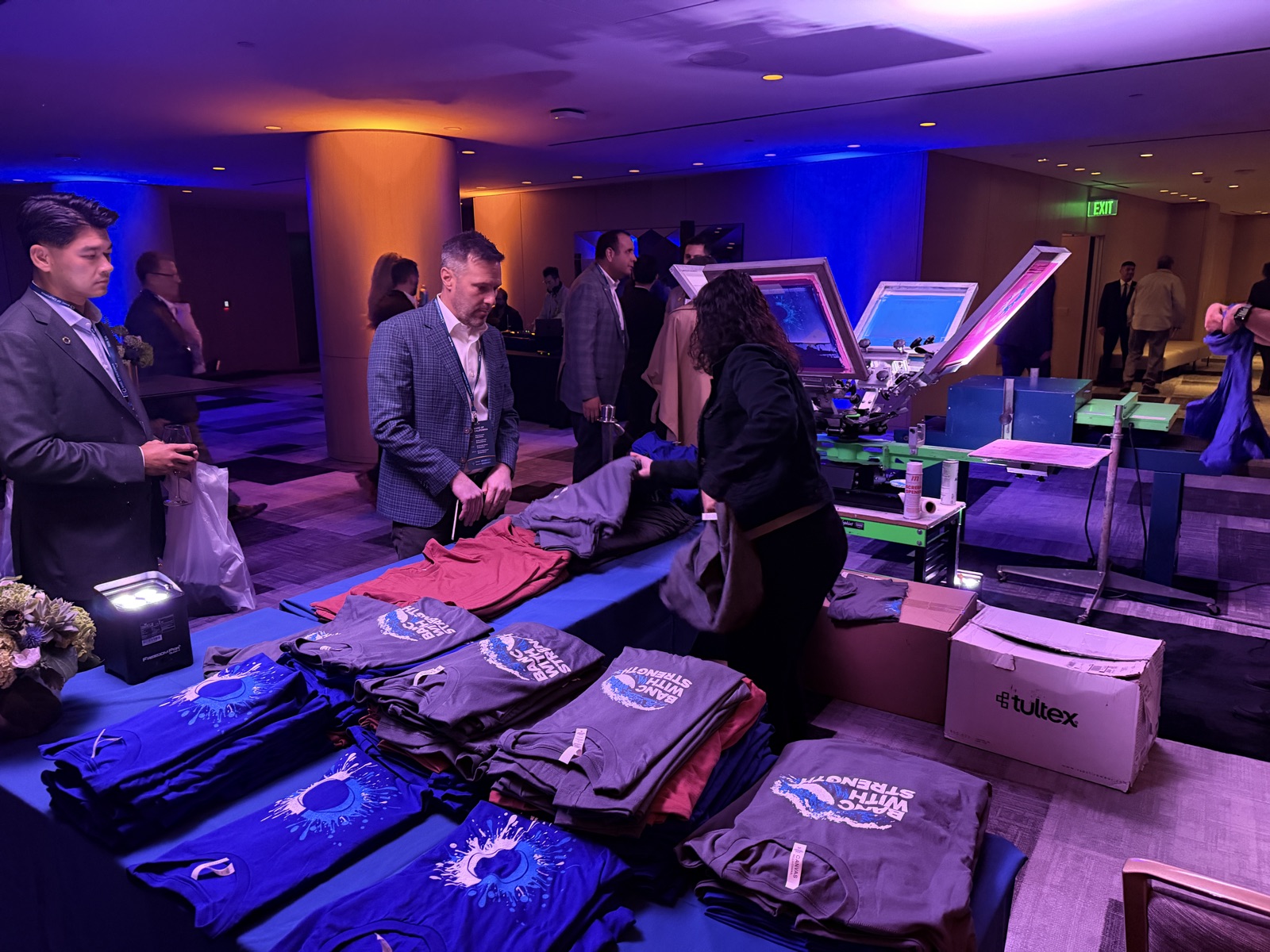
A live t-shirt printing station is one of the few activations where the production is the entertainment. Guests choose a design, pick a size, and watch their shirt come off the press in front of them. Done well, it draws a line, builds buzz, and sends people home in branded merch they actually wear. Done badly, it becomes a slow, confusing bottleneck that stalls the rest of your event. The difference is almost never the printer — it is the plan. This guide walks through how Merch Troop plans live printing booths for corporate events, trade shows, conferences, and brand activations across Southern California and nationwide.
Start With the Guest Path, Not the Press
The most common planning mistake is to start with the machine. The right starting point is the guest path: the route a person takes from "I want a shirt" to "I'm wearing it." Map four zones before you choose anything else.
- Entry / queue. Where the line forms and how it stays out of traffic aisles.
- Selection. Where guests pick a design and a size — ideally before they reach the press.
- Production. The press, heat station, and operators, staged so guests can watch.
- Pickup. A separate handoff point so finished shirts don't clog the press.
When selection and pickup are separated from production, one slow guest never freezes the whole line. The press keeps pulling while decisions and handoffs happen on either side of it. Plan the footprint so the press faces the crowd, the size wall sits within arm's reach of operators, and the queue runs parallel to the booth rather than straight at it. A station that reads clearly from across the room pulls more guests in than any signage, and a clear path out keeps the area from turning into a bottleneck once shirts start finishing.
Set a Tight Product & Design Menu
Speed at a live booth comes from constraint. A short, curated menu of garments and a small set of designs keeps the line moving and still feels custom to each guest.
Garments
Pick two or three blanks at most: a standard cotton tee, a premium soft-style tee, and one upgrade like a long sleeve or hoodie. More than that and your size wall gets unmanageable. For a deeper breakdown, see our guide to the best blanks and products for live t-shirt printing.
Designs
Offer three to six approved graphics. A small menu lets you pre-stage screens or transfers and keeps guests from agonizing over choices. Let guests personalize within rails — a name, a number, or a color swap — rather than designing from scratch on the floor.
Match the Method to Your Speed Target
How fast a station feels depends on the decoration method and how much prep happens beforehand. The two workhorses for live events are screen printing and DTF (direct-to-film) heat transfer.
- Live screen printing is the most visual — the squeegee pull and flash cure are the show — and very fast per shirt once screens are burned, but each design needs its own screen.
- DTF transfers let you swap full-color designs instantly with a single heat press, which is ideal for many designs or photographic art.
If you are weighing the two, our DTF vs screen printing comparison breaks down color, setup, and speed for live events.
Staff the Booth for Line Speed
A live print station is a small production crew, not a single operator. For a steady line, plan roles rather than headcount alone:
- A greeter who manages the queue and walks guests through the menu.
- One or two press operators running production.
- A finisher handling cure, fold, and handoff at the pickup point.
Plan staffing against your peak, not your average. A two-hour reception with 300 guests has a very different rush than an eight-hour trade show with steady foot traffic. Merch Troop staffs to the peak hour and includes setup and teardown crew so the booth is camera-ready before doors open.
Lock Artwork and Logistics Before Load-In
Everything that can be decided in advance should be. The night before an event is the wrong time to be separating artwork or guessing size ratios.
Artwork prep
Color separation, screen burning, or transfer printing should be finished before the truck loads. Live day is for production, not pre-press.
Size and quantity planning
Order blanks to a realistic size curve — typically weighted toward M, L, and XL — with a buffer for popular sizes. Build a small overage so you don't run dry during the rush.
Venue logistics
Confirm power, table footprint, load-in time, and ventilation early. Heat presses and cure units draw real power, and venues care about where equipment sits.
The booth that "ran itself" all night is almost always the one that was fully planned the week before.
Whether your event is in Orange County, Los Angeles, San Diego, Las Vegas, or across the country, the planning sequence is the same: guest path first, then a tight menu, then method, staffing, and pre-production. Get those locked and the live press becomes the highlight of the floor instead of its bottleneck.
Plan my live printing booth →Live T-Shirt Printing Planning FAQ
How far in advance should I book a live printing station?
For local Southern California events, two to three weeks is comfortable for sourcing blanks and prepping artwork. For large guest counts, custom designs, or out-of-state travel, four to six weeks gives the smoothest result. Rush timelines are sometimes possible — ask.
How many shirts can a live station produce per hour?
It depends on method, design complexity, and crew size, which is why we plan to the line rather than a fixed machine rate. A well-staged booth with a tight menu and multiple stations keeps the queue moving steadily through the peak hour.
Do you handle setup, teardown, and travel?
Yes. Merch Troop crews handle product sourcing, artwork prep, staffing, setup, teardown, and travel. We are based in Southern California and plan events in Orange County, Los Angeles, San Diego, Las Vegas, and nationwide with enough lead time.