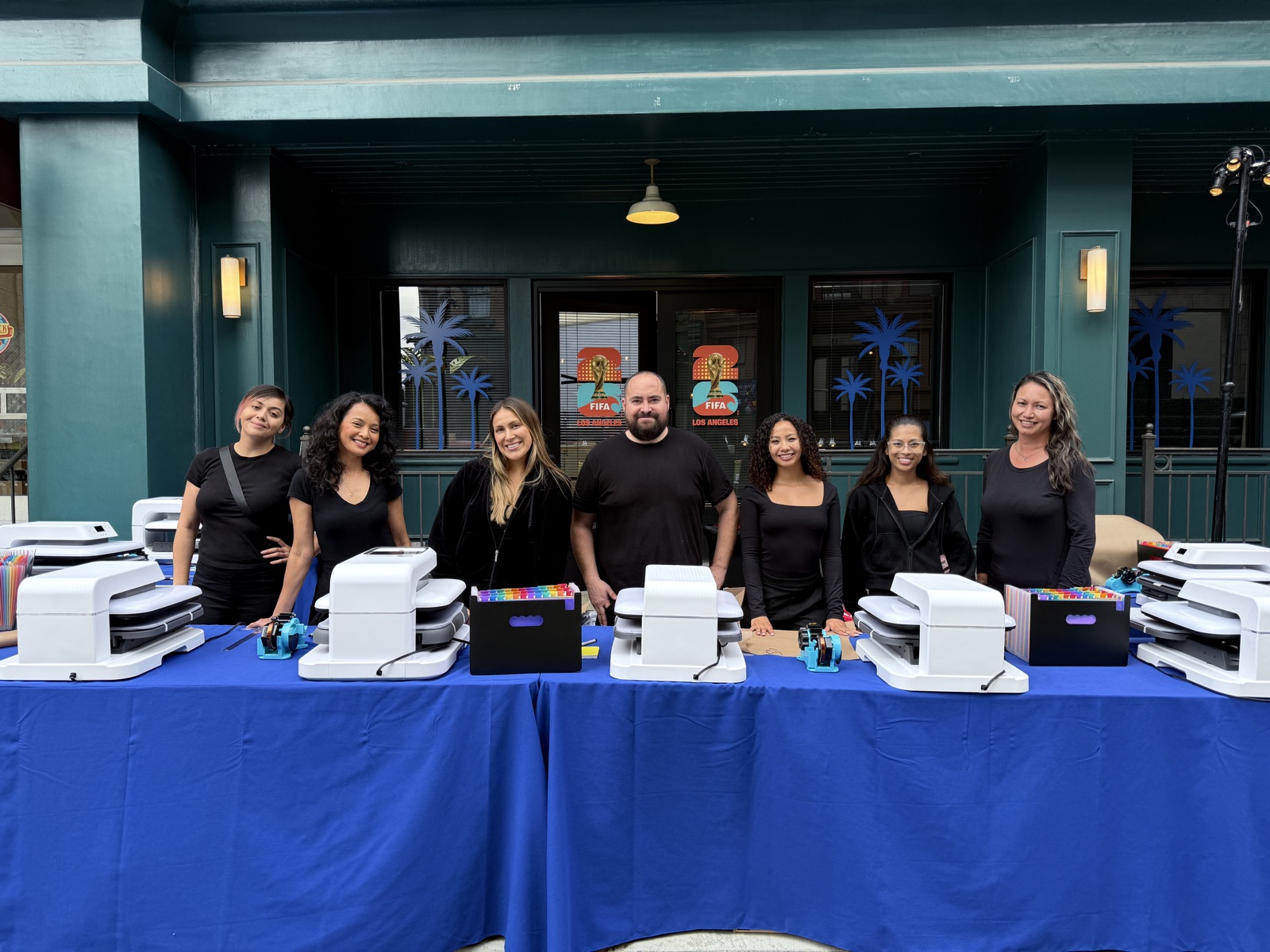
The two workhorse methods for printing t-shirts live at an event are screen printing and DTF — direct-to-film heat transfer. Both put a great-looking, durable graphic on a shirt in front of a crowd, but they behave very differently on a live floor, and the right choice depends on your designs, your speed target, and the look you want guests to walk away with. This guide breaks down how DTF and live screen printing actually compare for events, so you can pick the method — or the mix — that fits your activation. Merch Troop runs both for corporate events, conferences, trade shows, and brand activations across Southern California and nationwide.
How Each Method Works
Understanding the mechanics makes the trade-offs obvious.
Live screen printing
A design is burned onto a mesh screen ahead of the event, one screen per color. On the floor, an operator places a shirt, pulls ink across the screen with a squeegee, and flash-cures it. The squeegee pull and the flash are visual and tactile — it is the most "show" of any method, and it is what most people picture when they imagine live printing.
DTF (direct-to-film) transfers
A full-color design is printed onto a special film with a powdered adhesive backing, then pressed onto the garment with a heat press. The transfers can be printed in advance, so the live station is essentially a fast, clean heat-press operation that can switch between full-color designs instantly.
Color, Detail & the Look on the Floor
The biggest practical difference is how each handles color and complexity.
- Screen printing shines on bold, limited-color designs — a one- or two-color logo looks crisp, vivid, and unmistakably hand-pulled. Each additional color means another screen, so photo-real or many-color art gets impractical.
- DTF handles full-color, gradients, and photographic detail with no extra setup per color, making it the clear pick for complex art, multiple designs, or anything with fine gradients.
On feel, a screen print sits soft and integrated into the fabric, while DTF lays a thin, flexible film on top with a slightly different hand — both are durable and wash well when done right.
There is also a difference in how each reads as part of the experience. Guests genuinely enjoy watching a squeegee pull and a flash cure, so a screen station doubles as live entertainment that draws a crowd and slows people down at the booth. A DTF station is quieter and quicker, which is exactly what you want when the goal is to move a varied menu of full-color designs fast. Neither is "better" in a vacuum; the right call comes from matching the method to whether the print itself needs to be the spectacle or simply needs to look great and keep the line short.
Plan my live print method →Speed & Throughput at a Live Booth
Both are fast, but they reach speed differently. Once screens are burned, screen printing is extremely quick per shirt for a single design — but swapping to a different design means changing screens, which slows a multi-design menu. DTF keeps a steady pace and switches designs instantly, since it is just a heat press and a stack of pre-printed transfers, which makes it ideal when you want guests to choose from several graphics. For high-volume single-design giveaways, screen printing usually wins on raw throughput; for variety and personalization, DTF keeps the line moving.
Setup, Personalization & Durability
Setup and footprint
Screen printing needs press setup and registration on site and a bit more booth space; DTF is a leaner footprint built around the heat press. Both require adequate power for cure units and presses, which we confirm with the venue ahead of time.
Personalization
If you want guests to add a name, number, or pick from many graphics, DTF makes that effortless. Screen printing favors a tight, pre-set menu of designs.
Durability
Done correctly, both methods produce shirts that survive dozens of washes. Screen-printed ink is cured into the fabric; quality DTF transfers are pressed to bond firmly and stay flexible. Either way, guests get merch they can actually keep wearing.
The best live events often run both: screen printing as the visual centerpiece and DTF for full-color or personalized options on the side.
Which Should You Choose?
Use screen printing when you want maximum spectacle, a bold limited-color design, and high volume of a single graphic. Use DTF when you have full-color art, multiple designs, personalization, or photographic detail. Many activations combine the two for the best of both. Not sure which fits? Our planning guide covers matching method to speed target, and the best blanks guide helps pick garments that print cleanly with either. Merch Troop will recommend the right method — or mix — based on your designs, guest count, and the look you're after.
DTF vs Screen Printing FAQ
Is DTF or screen printing better for live events?
Neither is universally better — it depends on the design. Screen printing is best for bold, limited-color graphics and high single-design volume, and it's the most visual to watch. DTF wins for full-color, photographic, or multiple designs and easy personalization. Many live events run both.
Which method is faster at a live booth?
For one design at high volume, screen printing is extremely fast per shirt once screens are burned. For multiple designs or personalization, DTF is faster overall because it switches between full-color transfers instantly with no screen changes.
Does DTF last as long as screen printing?
Yes. Both methods produce durable, wash-resistant prints when done correctly. Screen ink cures into the fabric and quality DTF transfers bond firmly and stay flexible, so guests get merch they can keep wearing.